


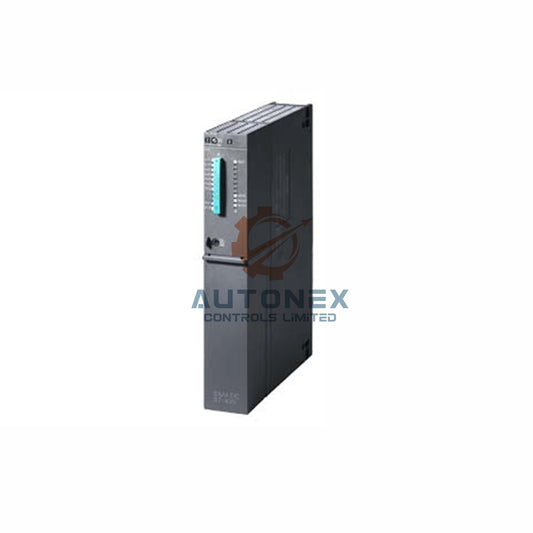
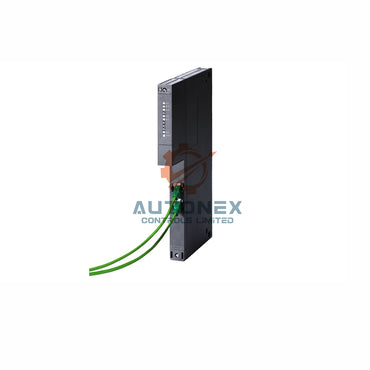
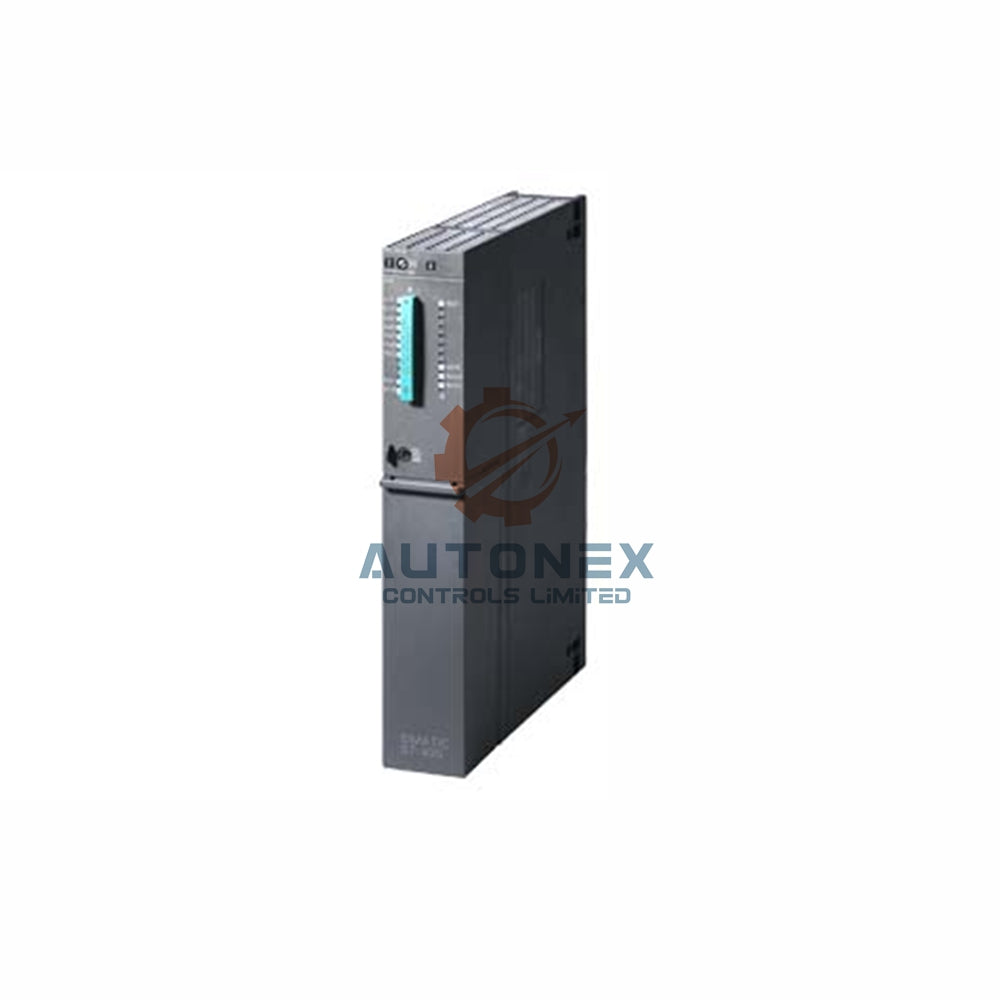


ControlNet Modernization: Moving From 1756-CNB to the High-Performance CN2R
1. Why Network Module Upgrades Are No Longer Optional
Industrial networks must constantly advance to manage growing data volumes. The transition from the 1756-CNB to the CN2R directly addresses this pressing requirement. For years, the 1756-CNB acted as a reliable foundation for ControlNet systems. Yet, contemporary applications quickly exceed its 5 Mbps throughput ceiling. Consequently, system integrators recognized that an upgrade was inevitable. This analysis dives into the technical reasons behind this essential change. We will demonstrate how the CN2R establishes new benchmarks for connectivity. Ultimately, grasping this evolution helps engineers guarantee both performance and system longevity.
2. Revisiting the 1756-CNB: A Reliable But Limited Platform
The 1756-CNB module historically served as the go-to solution for ControlNet bridging. It capably handled data transfers at the standard 5 Mbps speed. However, its design restricted simultaneous connections to roughly 64 nodes. Therefore, extensive distributed systems often encountered frustrating data bottlenecks. For example, downloading a 500 KB program could take several minutes to complete. Its processor, based on older architecture, struggled with the overhead of implicit messaging. Furthermore, the CNB does not support modern electronic keying functions. So, while dependable, it ultimately restricts performance in fast-paced environments.
3. CN2R: How Rockwell Automation Redesigned Throughput
Rockwell Automation developed the 1756-CN2R specifically to eliminate the CNB's constraints. This newer module incorporates a powerful processor for superior data management. As a result, it keeps the 5 Mbps ControlNet media speed but effectively doubles data handling capacity. The CN2R maximizes bandwidth usage through an optimized Producer/Consumer model. It also supports up to 100 nodes on a single network segment, increasing flexibility. Additionally, enhanced backplane communication allows 20% faster data transfers within the chassis. Thus, this upgrade guarantees smooth integration with modern, data-intensive controllers.
Author Insight: In my experience consulting for large-scale facilities, the CN2R's improved backplane speed is a game-changer. It significantly reduces the CPU wait time, allowing the controller to focus on logic rather than data movement.
4. Quantifiable Gains: Packets, Latency, and Speed
Hard data clearly illustrates the performance gap between these two modules. The older 1756-CNB typically processes about 2,500 packets per second under strain. In comparison, the CN2R efficiently handles over 4,800 packets per second. This jump represents a 92% improvement in packet processing capability. Moreover, the CN2R cuts communication latency by as much as 40% in bridged setups. For a standard 1 MB data exchange, the CNB needs 150 ms, whereas the CN2R finishes in 90 ms. These improvements directly contribute to faster machine cycle times. Therefore, such metrics strongly support migration for performance-driven facilities.
5. Integrated Redundancy and Smarter Diagnostics
The "R" in CN2R stands for a major step forward in media redundancy. The 1756-CNB required separate external hardware to achieve redundant media. Conversely, the CN2R features built-in support for both fiber and copper redundancy. This internal capability simplifies wiring and can reduce panel space by around 15%. Furthermore, it offers advanced diagnostics directly within the Studio 5000 environment. Operators can now monitor signal quality and error rates in real time. These tools enable predictive maintenance, potentially slashing unplanned downtime by 30%. So, the CN2R enhances both performance and ease of maintenance.
6. Navigating Compatibility and Memory Updates
Understanding compatibility is essential when planning a module upgrade path. The 1756-CNB mainly works with RSLogix 5000 versions older than 20. However, the CN2R demands at least Studio 5000 version 20 or newer to function. Its memory architecture also represents a significant departure from the older model. The CN2R includes a larger non-volatile buffer for storing configurations. This feature enables quicker module swaps and faster system recovery after issues. Compared to the CNB, the CN2R cuts connection recovery time by about 25% after a network fault. Hence, engineers must always verify controller firmware before proceeding with an upgrade.
7. Choosing the Right Module for Your Application
Selecting between these two modules now hinges on specific application demands. For simple, standalone machine control, a used 1756-CNB might still be adequate. Yet, for integrated architectures with multiple controllers, the CN2R is the logical pick. Imagine a production line with ten 1756-L7x controllers sharing I/O. The CN2R manages this traffic with 35% less CPU load on the backplane. Also, if you anticipate future expansion, the CN2R's higher node count is vital. Its ability to support 100 nodes ensures you can scale without immediate hardware changes. Therefore, the CN2R represents the smarter long-term investment for high-performance systems.
8. Case Study: Packaging Line Transformation
A real-world packaging line upgrade highlights the practical benefits of this evolution. The original configuration used three 1756-CNB modules operating at 80% network capacity. After swapping them for two 1756-CN2R modules, utilization dropped to just 45%. This freed up considerable bandwidth for adding safety I/O and vision systems. Subsequently, machine throughput rose by 12% thanks to reduced communication delays. The built-in diagnostics also quickly pinpointed a faulty cable segment. As a result, weekly maintenance efforts were reduced by approximately two hours. This example clearly shows the operational advantages of the newer module.
9. Physical Installation and Power Considerations
Physically, both modules share the same dimensions, but their internal components differ significantly. The 1756-CNB relies on older, less power-efficient ASICs than the CN2R. The CN2R draws 1.2A at 5.1V, slightly more than the CNB's 1.0A. Despite the minor increase, its power efficiency per data packet is far superior. Its operating range also extends to 60°C, making it suitable for tougher environments. Additionally, the CN2R features updated, brighter LEDs for quick status checks. These physical improvements boost both the reliability and user-friendliness on the plant floor.
10. Deeper Integration With Modern Software Ecosystems
The software landscape has advanced dramatically alongside the hardware improvements. The 1756-CNB is confined to older communication formats and data table structures. In contrast, the CN2R integrates flawlessly with the modern Studio 5000 Logix Designer environment. It fully supports Add-On Instructions (AOIs) for creating custom diagnostic routines. This integration allows engineers to program direct network reactions into their logic. For instance, the CN2R can trigger an alarm if packet rates fall below 1,000 per second. Such deep integration was simply not possible with the CNB's legacy firmware. Thus, the CN2R enables smarter, more responsive automation systems.
Author Insight: Leveraging AOIs with the CN2R's diagnostics has allowed my team to build self-monitoring machines. This proactive approach is becoming a baseline expectation in modern factory automation.
11. Financial Sense: Analyzing the Cost vs. Benefit
A careful cost-benefit analysis strongly favors migrating to CN2R modules. While the CN2R costs about 40% more than a used CNB, the advantages justify the expense. Savings from reduced downtime alone can recover the investment within six months. The increased data capacity often removes the need for extra communication modules. This saves on hardware costs and panel space, valued at roughly $500 per installation. Moreover, the CN2R's extended product lifecycle guarantees availability until at least 2030. Consequently, the total cost of ownership is considerably lower for the newer module.
12. Future-Proofing ControlNet for IIoT and Beyond
Choosing CN2R technology is a crucial step toward future-proofing your plant-floor operations. As IIoT initiatives expand, edge devices demand more data from controllers. The CN2R's enhanced buffering manages these requests without overloading the main CPU. It supports up to 256 simultaneous connections, doubling the CNB's capacity of 128. This capability is essential for connecting to modern HMIs and data historians. Furthermore, its compatibility with newer safety modules ensures a cohesive system architecture. Therefore, opting for the CN2R prepares your network for the next decade of industrial innovation.
13. Final Recommendation: Making the Strategic Upgrade
To conclude, the shift from 1756-CNB to CN2R is backed by undeniable performance evidence. The 92% boost in packet processing and 40% latency reduction are truly transformative. Engineers should now view the CNB as a legacy component suitable only for undemanding, specific uses. For all new installations and major upgrades, the CN2R stands as the definitive choice. It delivers superior diagnostics, built-in redundancy, and future-ready compatibility. By understanding these technical metrics, automation professionals can design networks that are robust and scalable. For optimizing modern industrial communication systems, the direction is unmistakably toward the CN2R.
Practical Application Scenario: Control System Upgrade
Consider an existing assembly line with multiple PLCs communicating over ControlNet. Currently, using 1756-CNB modules, the network experiences periodic slowdowns during high production. By upgrading to 1756-CN2R modules, the line gains immediate benefits: lower network utilization, room for additional safety nodes, and real-time diagnostic data. This proactive swap minimizes unplanned downtime and supports future integration with higher-level manufacturing execution systems (MES).
Frequently Asked Questions (FAQ)
1. Can I directly swap a 1756-CNB with a 1756-CN2R in my existing rack?
Yes, the physical dimensions are identical, so it fits in the same slot. However, you must update your project to Studio 5000 (version 20 or later) and verify controller firmware compatibility before the swap.
2. Does the CN2R improve speed on the ControlNet cable itself?
No, the media speed remains at 5 Mbps. The performance gain comes from more efficient data handling, higher packet processing, and faster backplane communication.
3. Is the built-in redundancy on the CN2R difficult to configure?
Not at all. Unlike the CNB, which needed extra hardware, the CN2R's redundancy is configured through the software, simplifying setup and reducing wiring complexity.
4. Will I need to replace my existing ControlNet cables and taps?
Generally, no. The CN2R works with the same physical media. However, its advanced diagnostics can help identify existing cabling issues that were previously unnoticed.
5. What is the main reason to choose CN2R for a new project?
The primary reason is scalability and future-proofing. Its support for 100 nodes and 256 connections ensures your network can grow without immediate hardware obsolescence.
Contact Information Inquiries: sales@nex-auto.com , +86 153 9242 9628
Partner NexAuto Technology Limited : https://www.nex-auto.com/
Check below popular items for more information in AutoNex Controls

