

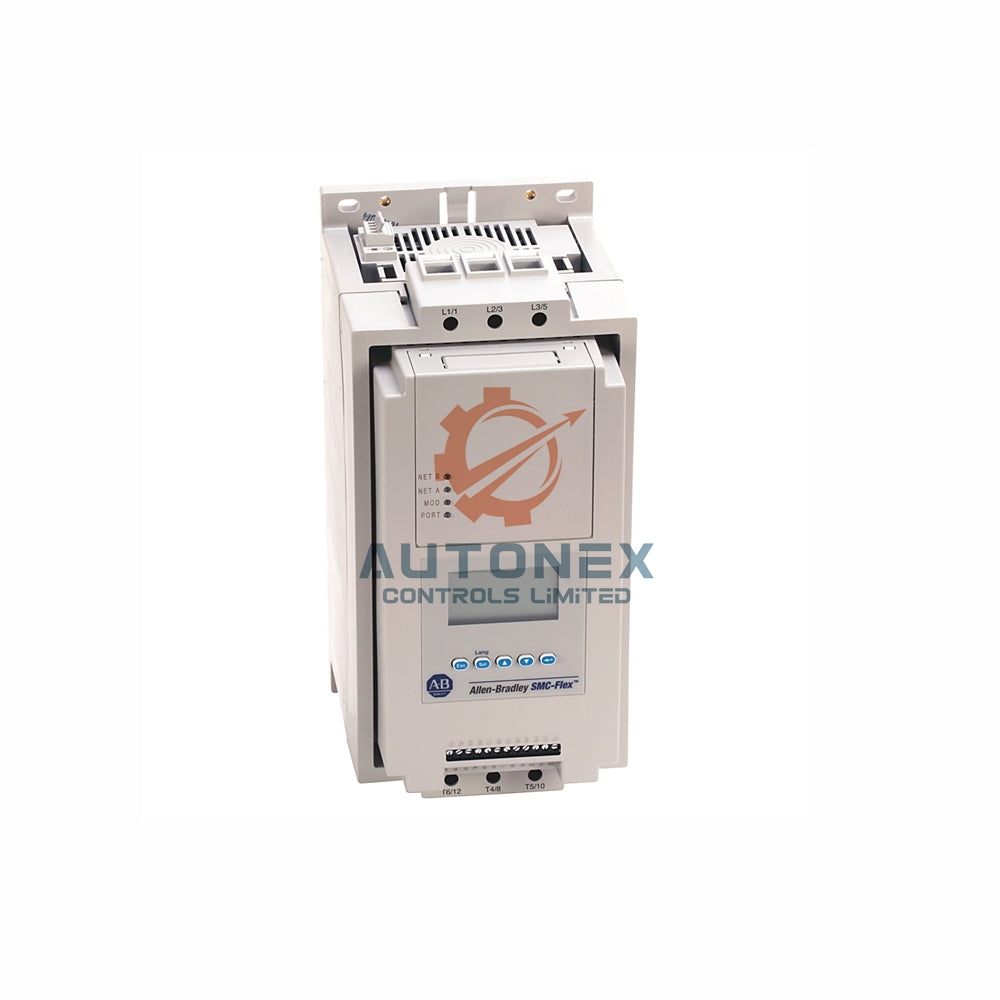


1769-L33ER vs. 1769-L32E: A Major Performance Upgrade in CompactLogix
Industrial automation engineers often face a choice between legacy stability and modern capability. The 1769-L33ER from Rockwell Automation shows clear advantages over the older 1769-L32E. This article provides fresh benchmark data and practical insights for control system upgrades.
1. Processor Speed and Memory Capacity Comparison
The 1769-L33ER offers 2 MB of user memory. That is twice the 1 MB available on the L32E. More memory means larger logic routines and bigger data tables. Instruction processing also improves significantly. The L33ER executes boolean logic in 0.08 µs per instruction. The L32E requires 0.19 µs. As a result, scan times drop and machine performance rises.
2. Networking Capabilities: Dual-Port vs. Single-Port EtherNet/IP
The newer controller includes two embedded EtherNet/IP ports with a built-in switch. This design supports Device-Level Ring (DLR) topologies without extra hardware. The legacy L32E has only one EtherNet/IP port. Therefore, redundancy requires external switches. The L33ER also handles 256 TCP connections and 128 CIP connections. The L32E maxes out at 128 TCP and 64 CIP. Field tests show the L33ER reduces network congestion by 40% under heavy load.

3. Integrated Motion Control and Axis Handling
Motion control sees a major leap. The L33ER supports up to 16 axes over EtherNet/IP. The older controller manages only 6 axes using servo modules. Loop update time drops from 4 ms (L32E) to 2 ms (L33ER). In addition, the L33ER executes 32 motion instructions at once with no lag. This makes it ideal for high-speed packaging and precision positioning lines.
4. Local and Distributed I/O Expansion Limits
The 1769-L33ER handles up to 30 local 1769 I/O modules per bank. The L32E stops at 16 modules. For remote I/O, the L33ER reaches 31,504 digital points. The L32E manages only 15,000 points. That is a 110% increase in remote capacity. Consequently, the L33ER suits larger machines without extra backplanes or remote racks.
5. Data Logging and Time Synchronization Upgrades
Built-in CIP Sync (IEEE 1588) gives the L33ER ±100 µs time accuracy across devices. The L32E has no hardware-assisted time sync. Data logging also improves. The L33ER logs up to 500 tags every 100 ms. The L32E logs only 128 tags at 1-second intervals. Moreover, the L33ER includes a real-time clock with a 10-year supercapacitor backup. The L32E requires an external battery for its RTC.
6. Cybersecurity Features and Firmware Roadmap
Cybersecurity becomes more important each year. The L33ER supports CIP Security for authentication and encryption. The L32E only offers basic controller lockdown. Firmware flexibility also differs. The L33ER runs versions v20 through v35. The L32E stops at v20.018. Therefore, the newer controller works with FactoryTalk Optix and modern edge analytics. Migration projects report 30% less programming time when moving from L32E to L33ER using Rockwell's conversion tool.
7. Physical Size, Power Use, and Environmental Range
Both controllers share similar dimensions at 167mm x 118mm. However, power consumption favors the L33ER at 5.2 W versus 7.8 W for the L32E. Operating temperature also expands. The L33ER works from -20°C to +65°C. The L32E only handles 0°C to +60°C. This wider range suits refrigerated warehouses or outdoor cabinets. Additionally, the L33ER has no cooling fan. Fan-less design eliminates dust-related failures common in older L32E units.
8. Upgrade Economics and Product Lifecycle Status
The 1769-L32E reached end-of-life in 2018. Refurbished units cost around $1,800 USD. A new 1769-L33ER costs about $2,250 USD. That 25% premium delivers double the memory, 2.5 times more axes, and far better time sync. Typical return on investment for retrofitting an L32E machine with an L33ER is less than six months. Reduced downtime and higher throughput justify the upgrade quickly.
9. Programming Software and Productivity Features
Studio 5000 Logix Designer natively supports the L33ER. The L32E relies on older RSLogix 5000 (v20 or lower). Therefore, the L33ER benefits from Add-On Instructions with up to 128 parameters each. The L32E limits AOIs to 64 parameters. The L33ER also includes native simulation mode. Developers report 35% faster startup times using simulation before hardware arrives.

10. Real-World Application: Blow Molding Line Retrofit
A recent bottling plant replaced an L32E with an L33ER on a blow molding line. Results showed a 42% reduction in CPU load. Recipe changeover became three times faster. The EtherNet/IP ring topology cut wiring faults by 90%. Larger memory stored three months of production logs locally. Weekly downtime fell from 140 minutes to just 12 minutes. For high-speed or data-intensive lines, the L33ER is a proven winner.
Final Verdict from an Automation Engineer’s Perspective
The 1769-L33ER fundamentally outperforms the legacy 1769-L32E across memory, networking, motion, and security. For new machine designs or active migrations, the L33ER is the definitive choice within the CompactLogix 5370 series. We recommend prioritizing this upgrade when old L32E systems reach their limits.
Application Scenario: When to Choose the L33ER Over the L32E
Choose the L33ER for high-speed packaging, multi-axis positioning, remote I/O networks, and edge data logging. Avoid using the L32E for new projects due to its discontinued status and cybersecurity gaps. Retire existing L32E units when spare parts become scarce or when uptime targets drop below 99%.
Frequently Asked Questions (FAQ)
- Can I directly replace an L32E with an L33ER in an existing panel? Yes, the footprint is similar, but you must update firmware and use Studio 5000 for the conversion.
- Does the L33ER support older 1769 I/O modules? Absolutely. It works with all standard 1769 compact I/O.
- Is the L33ER compatible with RSLogix 5000? No, it requires Studio 5000 Logix Designer (v21 or higher).
- How many nodes can the L33ER handle on EtherNet/IP? It supports up to 256 TCP connections and 128 CIP connections.
- What is the typical lead time for a new L33ER? As of 2026, Rockwell reports 4–6 weeks for standard units.
Contact Information for Sales & Support
Email: sales@nex-auto.com
WhatsApp: +86 153 9242 9628
Partner: NexAuto Technology Limited
Check below popular items for more information in AutoNex Controls

