

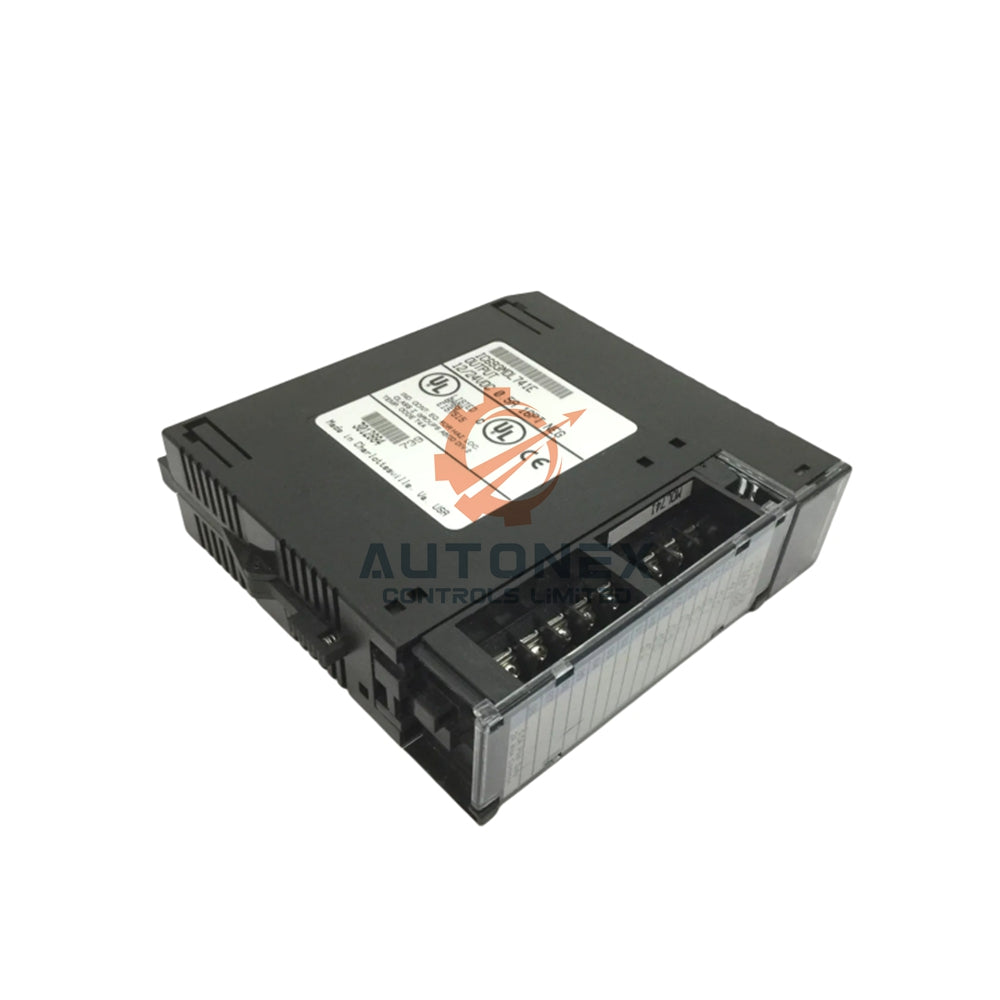


IC693PRG301 Handheld Programmer vs. IC693CPU374: Why Monitoring and Forcing I/O Is Not Supported
Engineers working with GE Fanuc Series 90-30 controllers often ask whether the IC693PRG301 handheld programmer can monitor and force I/O on the IC693CPU374 CPU. The short answer is no. Official documentation confirms this incompatibility. This article explains the technical reasons, compares both devices, and recommends practical alternatives for commissioning and diagnostics in industrial automation environments.
Official Documentation Confirms the Compatibility Gap
The IC693PRG301 is a handheld programming device for the Series 90-30 platform. It uses a 15-pin D-type connector and a two-line LCD display. However, the IC693CPU374 specification sheet clearly states that this CPU does not support the Hand Held Programmer. Therefore, monitoring and forcing I/O points through this pairing is impossible.
Architectural Limitation, Not a Firmware Issue
This restriction is not a firmware setting. GE designed the CPU374 architecture without the interface circuitry required for HHP communication. As a result, the programmer cannot establish a link with this CPU module. In addition, industry sources confirm that CPUs numbered 350 and above do not support the handheld programmer or the memory card interface.
IC693CPU374 Technical Specifications
The IC693CPU374 marks a major step forward for the Series 90-30 line. It uses an AMD SC520 processor running at 133 MHz. Boolean execution time is rated at 0.15 microseconds per instruction. Moreover, the module offers 240 KB of user memory and supports up to 2,048 discrete input points and 2,048 discrete output points.
Embedded Ethernet Reflects a Networking Shift
The CPU374 includes an embedded Ethernet interface with two 10/100 base-T ports. This native networking capability separates it from older Series 90-30 CPUs. The design clearly prioritizes networked communication over legacy serial programming interfaces. Consequently, software-based tools become the primary path for diagnostics and forcing.

What the IC693PRG301 Can and Cannot Do
GE engineered the IC693PRG301 for earlier Series 90-30 CPU models. It supports Statement List programming and can monitor reference data or I/O status on compatible CPUs. The device communicates through an RS-422 compatible port. Nevertheless, these monitoring and forcing functions require a compatible CPU. The HHP cannot override the fundamental incompatibility with the CPU374.
Recommended Alternatives for Monitoring and Forcing
Engineers who need I/O monitoring and forcing on the IC693CPU374 must use software-based solutions. The CPU374 supports the PLC Program Download Device and the EZ Program Store Device for program management. For real-time diagnostics and forcing, GE Fanuc programming software packages provide the necessary functionality.
How Software Tools Connect to the CPU
These software tools communicate with the CPU through its embedded Ethernet ports or the RS-485 port on the power supply. This approach leverages the native communication capabilities of the CPU374. It also provides a more comprehensive diagnostic interface than the two-line display of the handheld programmer. In addition, software tools support the entire Series 90-30 range, which simplifies mixed-inventory maintenance.
Practical Implications for Maintenance and Commissioning
Personnel responsible for maintaining Series 90-30 systems must verify CPU compatibility before relying on handheld programmers. The IC693PRG301 remains useful for legacy CPUs but has no application with the CPU374 or higher-numbered models. Organizations with mixed Series 90-30 inventories should standardize on software tools that support the entire range.
Migration Planning and Long-Term Sustainability
The discontinued status of the IC693PRG301 further reinforces the need for migration planning. Spare units may become increasingly difficult to source. Therefore, software-based solutions offer a more sustainable long-term approach for Series 90-30 maintenance. This transition from handheld programming to software-based commissioning reflects broader industry trends in factory automation.
Author Insight: A Predictable Evolution in Control Systems
From a commissioning perspective, this limitation is less a defect and more a sign of architectural progress. The CPU374 targets networked control systems, where engineering workstations handle diagnostics and forcing. Technicians who adapt to GE Fanuc programming software gain faster access to fault data and better traceability. In my view, plants should treat the HHP as a legacy support tool, not a primary commissioning device.
Application Case: Upgrading a Mixed Series 90-30 Line
A maintenance team running both older Series 90-30 CPUs and CPU374 modules can standardize on a laptop with GE Fanuc programming software. The team connects through Ethernet for CPU374 diagnostics and forcing. For legacy CPUs, the same software or the IC693PRG301 can handle monitoring. As a result, the team avoids tool duplication and reduces training effort.

Conclusion
The IC693PRG301 handheld programmer cannot monitor or force I/O points on an IC693CPU374. GE documents this limitation in the official CPU374 specification sheet. Engineers must instead use GE Fanuc programming software communicating through the CPU's Ethernet or RS-485 interfaces. This approach provides full diagnostic and forcing capabilities while aligning with contemporary commissioning practices in industrial automation.
Frequently Asked Questions
Q1: Can the IC693PRG301 monitor I/O on the IC693CPU374?
No. The CPU374 does not support the handheld programmer, so monitoring and forcing are not possible through this combination.
Q2: Is the incompatibility caused by firmware?
No. The CPU374 lacks the necessary interface circuitry for the HHP connection. It is an architectural limitation, not a firmware restriction.
Q3: Which CPUs in the Series 90-30 line support the handheld programmer?
Industry sources indicate that CPUs numbered 350 and above do not support the handheld programmer or the memory card interface. The HHP targets earlier CPU models.
Q4: What tools should I use for forcing I/O on a CPU374?
Use GE Fanuc programming software. Connect through the embedded Ethernet ports or the RS-485 port on the power supply for diagnostics and forcing.
Q5: Can I still use the IC693PRG301 in a mixed Series 90-30 plant?
Yes, for legacy CPUs. However, standardizing on software tools that support the full range is more efficient and sustainable, especially since the HHP is discontinued.
Contact Information Inquiries: sales@nex-auto.com | +86 153 9242 9628
Partner NexAuto Technology Limited: https://www.nex-auto.com/
Check below popular items for more information in AutoNex Controls
| GL-R31F | GL-R39F | GL-R47F |
|---|---|---|
| GL-R55F | GL-R63F | GL-R71F |
| GL-R79F | GL-R87F | PZ-G51CN |
| PZ-G51CP | PZ-G51EN | PZ-G51EP |
| PZ-G51CB | PZ-G51N | PZ-G51P |
| PZ-G52CN | PZ-G52CP | PZ-G52EN |
