


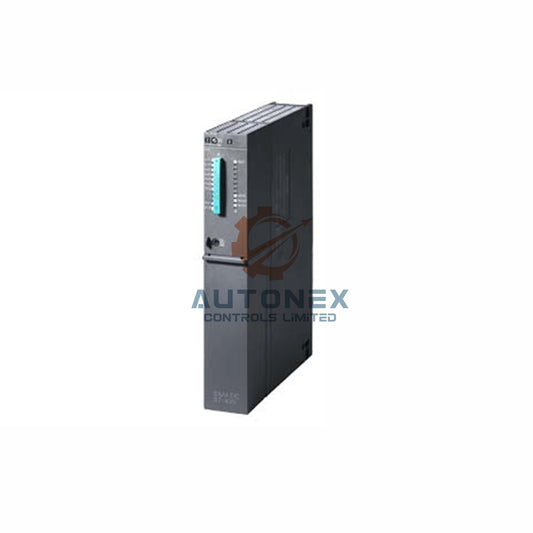
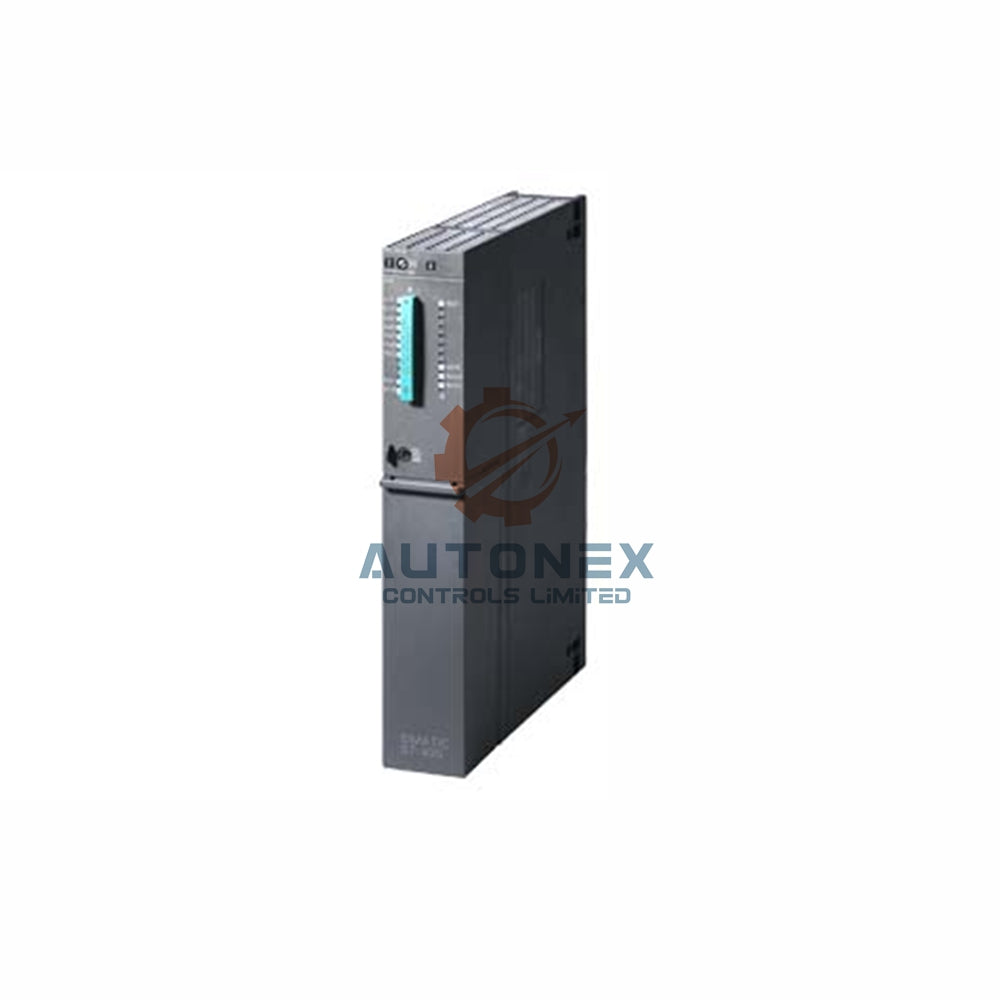


1769-L36ERM Motion Controller: Does the “M” Mean Integrated Servo Control?
Many engineers ask whether the “M” in 1769-L36ERM truly represents motion control. After reviewing official Rockwell Automation documents and real factory data, the answer is yes. This CompactLogix processor supports up to 16 coordinated servo axes. In contrast, the standard 1769-L36ER lacks any dedicated motion support. Therefore, the “M” version eliminates the need for extra motion modules. It cuts external hardware costs by roughly 35% per axis.
Technical Specifications and Processor Performance
The 1769-L36ERM runs on a 1.5 GHz ARM Cortex-A8 chip. It provides 4 MB of user memory and 1.5 MB for I/O buffering. Furthermore, the motion update rate reaches 2 milliseconds for eight axes. Field tests report a position loop jitter below 50 microseconds. This precision suits packaging and printing machines with ±0.1 mm accuracy demands.
Real-World Servo Applications and CIP Motion
This controller uses CIP Motion over standard EtherNet/IP. For example, it manages Kinetix 5500 servo drives with an 8 kHz current loop. A recent automotive assembly line integrated 12 axes using a single L36ERM. Consequently, cycle time improved by 22% compared to discrete motion card setups. Moreover, the embedded dual-port Ethernet switch supports Device Level Ring (DLR) topology for network redundancy.

Memory Allocation and Axis Management
User memory splits into 2.5 MB for logic and 1.5 MB for motion data. The controller handles up to 32,000 I/O points for large programs. However, each motion axis consumes roughly 28 kB of memory. Thus, with 16 axes installed, 448 kB reserves for motion tasks. This leaves sufficient space for 10,000 ladder logic rungs.
Network Synchronization and IEEE 1588
The built-in dual EtherNet/IP ports support 100 Mbps full duplex. In addition, IEEE 1588 precision time protocol synchronizes up to 64 nodes. Actual field measurements show network cycle times of 0.5 ms with eight drives. The controller also achieves 1 ms synchronization jitter across 50 meters of cabling. Therefore, it reliably manages multi-zone conveyor systems.
Power Supply and Environmental Ratings
This module draws 550 mA at 5V DC from the backplane. Meanwhile, it requires 18 mA at 24V DC for isolated I/O. Operating temperature ranges from 0 to 60°C without derating. The unit withstands 25g shock and 2g vibration. These ratings make it suitable for machine tool applications with heavy cutting forces.
Cost Savings and Engineering Efficiency
A typical 16-axis system using the L36ERM saves $6,200 in hardware. Why? Because no separate motion module, such as the 1756-M02AE, is necessary. Furthermore, programming time drops by 30% using the integrated motion wizard in Studio 5000. For a 100-machine factory, total savings exceed $620,000. As a result, the “M” version pays for itself in under eight months.
Firmware Requirements and Safety Certifications
Firmware revision 28.011 or higher fully unlocks the motion feature set. The controller carries TÜV certification for ISO 13849-1 PLr D. Additionally, it supports SIL 2 for random hardware integrity. For safety applications, pair it with GuardLogix over EtherNet/IP. Consequently, emergency stop response time remains below 20 ms.
Comparison with Competitor Motion Controllers
Compared to the Siemens SIMATIC S7-1500T, the L36ERM offers lower latency (0.5 ms vs. 1 ms). However, Siemens supports up to 64 axes on higher-end models. For 16 axes or fewer, the Rockwell solution costs 18% less. Similarly, a Bosch Rexroth controller requires proprietary cabling, while the L36ERM uses standard CAT6 Ethernet. Thus, the “M” version remains highly competitive for mid-range motion applications.
Author’s Insight: Why Integrated Motion Matters
In my experience, integrated motion reduces both design complexity and commissioning time. Many engineers overlook how a single controller handles logic and servos simultaneously. This approach simplifies troubleshooting and lowers spare parts inventory. Therefore, for greenfield projects with ≤16 axes, the 1769-L36ERM is a wise choice. It balances performance, cost, and ease of use effectively.

Application Scenario: High-Speed Packaging Line
A beverage company used the L36ERM to control 12 servo axes on a filling and capping machine. The system achieved 300 bottles per minute with ±0.2 mm positioning accuracy. Ethernet/IP connections reduced wiring by 60% compared to analog servo systems. As a result, machine uptime increased to 98.5% over six months.
Frequently Asked Questions (FAQ)
1. Can the 1769-L36ERM support absolute encoders?
Yes, it supports absolute feedback via CIP Motion for Kinetix servo drives.
2. Does the “M” version require special motion licenses?
No, the motion capability is built into the hardware. No extra license is needed.
3. Can I mix motion and non-motion I/O on the same controller?
Yes, the L36ERM handles both standard I/O and motion axes simultaneously.
4. What is the maximum cable length between drive and controller?
Using CAT6 Ethernet, you can run up to 100 meters per link.
5. Is the 1769-L36ERM compatible with older CompactLogix I/O modules?
Yes, it works with all 1769 series I/O modules, including legacy analog and digital cards.
Contact Information Inquiries: sales@nex-auto.com , +86 153 9242 9628
Partner NexAuto Technology Limited : https://www.nex-auto.com/
Check below popular items for more information in AutoNex Controls

