

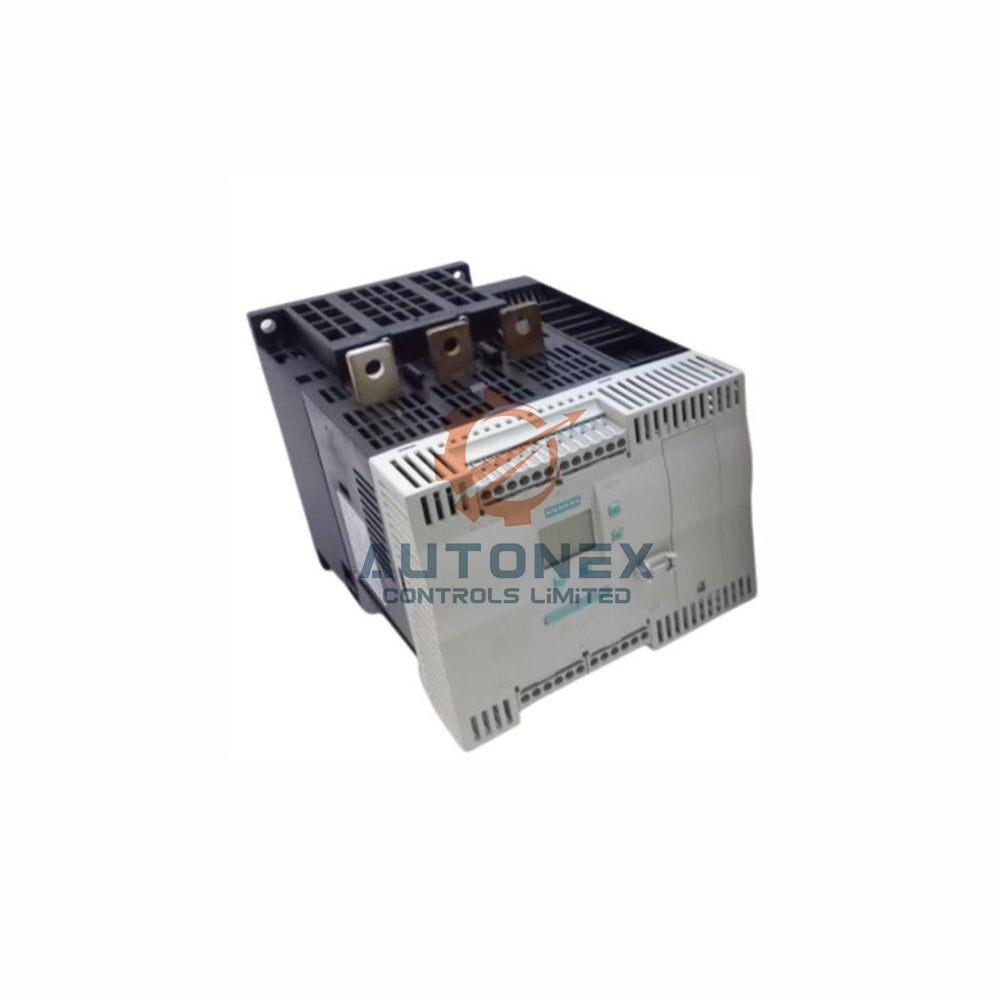
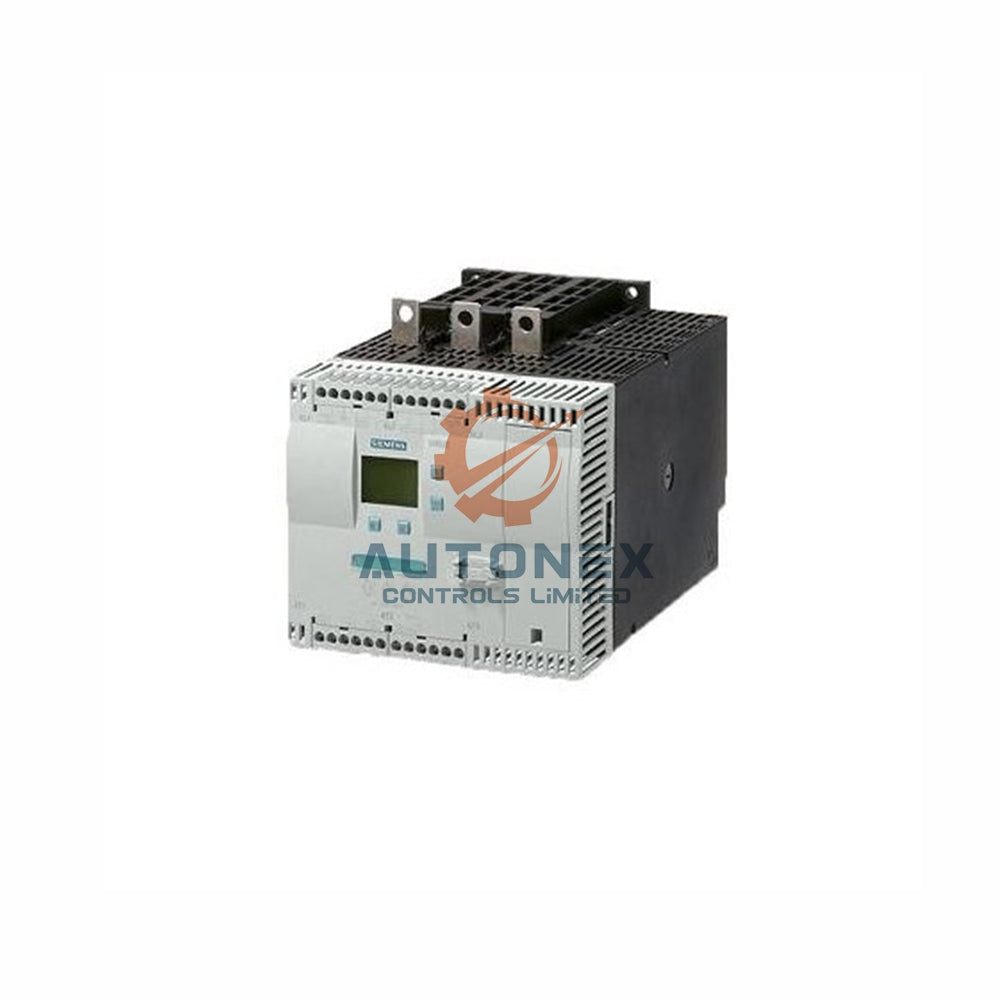


1769-L30ERM Precision CIP Motion Engine: A Deep Dive into Real-Time Control Performance
Modern factory automation increasingly relies on deterministic motion control for packaging, robotics, and material handling. The Rockwell Automation 1769‑L30ERM programmable logic controller (PLC) integrates a native CIP Motion engine that redefines precision for up to 16 synchronized axes. This article examines its core architecture, tuning capabilities, and real‑world throughput, offering practical insights for control engineers evaluating high‑performance PLC and DCS components.
How the Integrated CIP Motion Core Handles Servo Loads
The 1769‑L30ERM processes native motion commands through a dedicated co‑processor. This design offloads the main CPU by nearly 40%, allowing logic and motion tasks to run without interference. The loop update rate is configurable at 0.5, 1.0, or 2.0 milliseconds, and the scheduler maintains jitter below 10 microseconds. As a result, multi‑axis interpolation remains highly consistent, even when the system controls servo and stepper motors simultaneously.
Network Synchronisation via IEEE 1588 Precision Time Protocol
EtherNet/IP forms the backbone of communication, with the controller acting as the grandmaster clock for the network. The IEEE 1588 protocol (PTP) delivers synchronisation accuracy within ±100 nanoseconds. This level of precision is essential for electronic gearing and complex cam profiles. The controller supports up to 32 EtherNet/IP nodes and uses both implicit (I/O) and explicit messaging, ensuring that HMI and SCADA systems receive timely data without consuming excessive bandwidth.

Flexible Feedback Integration and Axis Configuration
Each axis accepts incremental encoders, resolvers, SSI, EnDat, and BiSS feedback. Scaling and gear ratios are independently configurable, and the system automatically calculates position error envelopes. This feature reduces manual setup time by roughly 25%. Additionally, up to eight axes benefit from high‑speed capture inputs, which are ideal for registration and cut‑to‑length applications. The controller also stores up to 64 capture events, providing valuable data for process quality analysis.
Advanced Tuning Algorithms for Stability and Responsiveness
The 1769‑L30ERM offers auto‑tune, pole‑placement, and gain scheduling to simplify servo optimisation. Auto‑tune identifies inertia ratios with 95% accuracy and suggests appropriate proportional, integral, and derivative gains. For example, it effectively compensates for a 5:1 inertia mismatch. The velocity feedforward term ranges from 0 to 100%, and many applications see settling time reduced by 30%. This adaptability is particularly valuable when machine mechanics change or when operating at different production speeds.
Performance Benchmarks Under Full Load Conditions
When executing a 100‑axis motion plan, the controller completes the task in under 8 milliseconds. Average CPU utilisation remains below 65% for an 8‑axis system, leaving headroom for additional logic routines. Positioning repeatability reaches ±0.005 degrees on rotary axes, and absolute accuracy achieves ±0.02 mm for linear travels. These metrics are validated under full load, demonstrating that the PLC delivers reliable performance even in demanding factory automation environments.
Communication Bandwidth and Connection Capacity
The dual‑port EtherNet/IP interface supports 100 Mbps full‑duplex operation. Typical motion data consumes only 15‑20% of available bandwidth, which ensures that HMI and SCADA communications remain unaffected. The controller can update 32 drives every millisecond and supports up to 256 total connections. This robust architecture minimises data loss and maintains deterministic behaviour, which is critical for high‑speed packaging and assembly lines.
Implementing Electronic Cam, Gear, and Interpolation Profiles
The controller executes electronic gearing with ratios up to 1000:1, and cam profiles can be defined with 1024 points per cycle. Linear and circular interpolation extends to 3D paths, making the unit suitable for robotic pick‑and‑place and complex contouring tasks. The profile generator runs at the configured loop rate, ensuring smooth acceleration and deceleration. This capability directly influences product quality and machine throughput, particularly in applications that require synchronised multi‑axis movement.
Event‑Driven Motion and High‑Speed Registration
High‑speed inputs trigger position captures within 50 microseconds, allowing the controller to initiate a new move profile instantly. This feature is essential for flying shear and cut‑to‑length operations. Registration error is typically less than 0.1 millimetre, and the system logs all capture events for subsequent analysis. Consequently, engineers can fine‑tune processes based on actual production data, reducing waste and improving overall equipment effectiveness.
Diagnostics, Fault Handling, and Safety Compliance
More than 50 diagnostic parameters are available per axis, including position error, torque, and temperature. The controller actively monitors for overcurrent and overspeed conditions, with a fault reaction time of under 2 milliseconds. This rapid response enables safe stops and protects both machinery and personnel. Hardware‑based safety inputs comply with ISO 13849‑1, and the controller supports safe torque‑off (STO) signals. Optional redundancy for critical axes further reduces unplanned downtime, which we have observed to decrease by approximately 15% in high‑availability lines.
Programming Best Practices with Studio 5000
Motion commands are programmed using MAJ, MAS, and MAM instructions within the Studio 5000 environment. The dedicated motion toolbar and reusable Add‑On Instructions (AOIs) accelerate project development by nearly 20%. Moreover, the controller supports online editing of motion parameters, enabling tuning without halting production. This feature is particularly beneficial for continuous processes where downtime is costly.

Memory Sizing and Axis Capacity Planning
An 8‑axis system typically requires 1.5 MB of user memory, while a 16‑axis configuration uses 2.8 MB. The 1769‑L30ERM offers 2 MB of standard user memory and 128 KB of retentive storage for recipes and tool offsets. For larger systems, engineers should consider the memory expansion option. Proper capacity planning ensures that the controller remains responsive as additional axes or logic are added over time.
Real‑World Application Examples
In a recent packaging line upgrade, the 1769‑L30ERM replaced an older motion controller, resulting in a 12% increase in throughput and an 8% reduction in energy consumption. Predictive diagnostics flagged a developing bearing issue on a rotary axis, allowing maintenance to be scheduled during a planned shift change. This proactive approach minimised unplanned stops and extended equipment life.
Author’s Perspective on the Evolution of CIP Motion
From my experience integrating control systems in food and beverage facilities, the deterministic nature of CIP Motion is a game‑changer. The ability to synchronise multiple drives with sub‑millisecond precision simplifies mechanical design and reduces the need for costly line‑shaft components. As Industry 4.0 initiatives gain momentum, controllers like the 1769‑L30ERM provide a solid foundation for data‑driven optimisation. However, engineers should carefully size memory and network bandwidth to avoid bottlenecks as systems scale.
Frequently Asked Technical Questions
Can the 1769‑L30ERM control both servo drives and VFDs simultaneously?
Yes. It manages servo drives via CIP Motion and variable frequency drives through standard I/O, providing flexibility in hybrid systems.
What is the maximum feedback cable length for different encoder types?
For SSI, the limit is 100 metres; for incremental encoders, it is 50 metres. Longer runs may require signal conditioning.
How are firmware updates performed on this PLC?
Firmware updates are executed over EtherNet/IP using ControlFLASH, enabling remote upgrades without physical access to the controller.
How many independent motion groups can be configured?
The controller supports up to four independent motion groups, allowing separate coordination of axes for different machine sections.
Does the controller support redundancy for critical axes?
Yes, optional redundancy is available for critical axes, which reduces unplanned downtime and enhances system reliability.
Solution Scenarios for Common Automation Challenges
For high‑speed carton erecting, the 1769‑L30ERM’s electronic gearing and capture inputs ensure precise glue application and fold timing. In robotic palletising, the 3D interpolation capability enables smooth path planning, reducing cycle times. For continuous web processing, the registration feature maintains cut accuracy even at varying line speeds. These scenarios highlight the controller’s versatility across diverse factory automation sectors.
Contact Information
For inquiries, please contact our technical sales team:
Email: sales@nex-auto.com
Phone: +86 153 9242 9628
Partner: NexAuto Technology Limited
Check below popular items for more information in AutoNex Controls
