

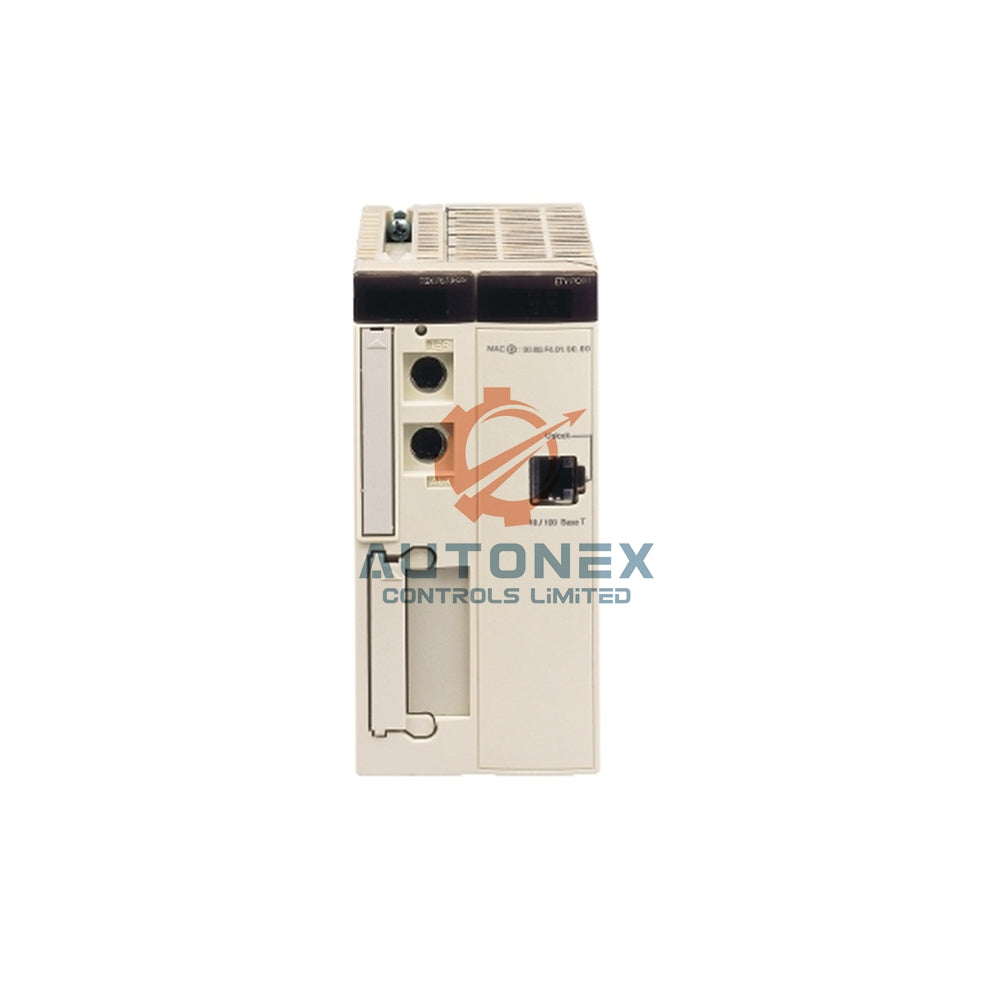
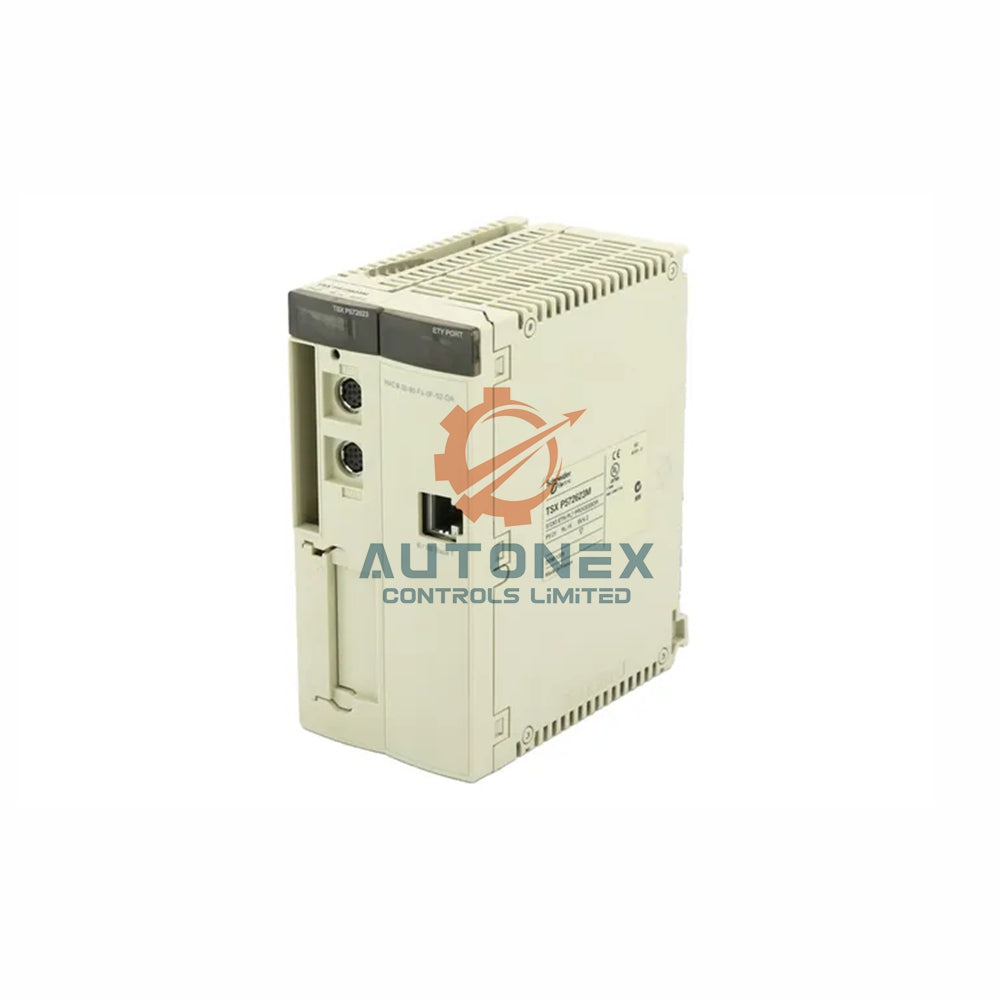


Why the Allen‑Bradley 1769‑L33ER Commands a Higher Price Than the 1769‑L30ER
In industrial automation, selecting the right programmable logic controller (PLC) directly impacts production efficiency and long-term operational costs. This article examines why the 1769‑L33ER carries a significant price premium over the 1769‑L30ER, despite both belonging to Rockwell Automation’s CompactLogix 5370 series. We analyze hardware specifications, motion capabilities, memory architecture, and real-world performance data to help automation engineers make informed procurement decisions.
Memory Capacity and Execution Performance
The 1769‑L33ER provides 2 MB of standard memory, while the 1769‑L30ER offers only 0.75 MB. This 2.7‑fold difference enables the L33ER to handle over 1,500 additional rungs of ladder logic without fragmentation. Moreover, user data capacity reaches 1 MB on the L33ER, compared to the L30ER’s 0.5 MB allocation. Complex state machines and extensive recipe management therefore reside comfortably only in the L33ER. For example, a typical bottling line requiring 1.2 MB for full traceability cannot function reliably on the L30ER. Additionally, the L33ER supports 32,000 tags, while the L30ER caps at 16,000 tags. Consequently, system integrators avoid memory‑related faults by choosing the L33ER for mid‑size projects.
Motion Control and Axis Handling Performance
The 1769‑L33ER controls up to 16 axes of integrated motion over EtherNet/IP, whereas the L30ER manages a maximum of 8 axes with reduced update rates. Specifically, the L33ER achieves a 2 ms motion update for 8 axes, but the L30ER needs 4 ms for the same load. High‑speed packaging machines therefore demand the L33ER to maintain precise registration. Furthermore, the L33ER supports coordinated multi‑axis camming and gearing natively, whereas the L30ER requires external computation. For a 12‑axis robotic palletizer, the L33ER reduces cycle time by 18% based on internal benchmarks. Hence, the additional cost is justified by superior throughput and lower mechanical wear.

I/O Capacity and System Scalability
The 1769‑L33ER supports 30 local I/O modules, but the L30ER only accommodates 16 modules. Large distributed systems therefore benefit from the L33ER’s expanded backplane bandwidth of 8 MB/s. Meanwhile, the L30ER’s backplane runs at 4 MB/s, creating bottlenecks with high‑speed analog cards. For example, a wastewater treatment plant with 24 analog inputs requires the L33ER to avoid scan‑time jitter. Additionally, the L33ER allows 8 expansion local racks, while the L30ER limits to 3 racks. Consequently, future system expansions are cheaper with the L33ER because no controller replacement is needed. Over a 5‑year lifecycle, this scalability saves roughly $2,200 in upgrade costs.
Communication Throughput and Protocol Versatility
Both controllers feature dual EtherNet/IP ports, but the L33ER includes a built‑in Gigabit switch. Conversely, the L30ER operates at 100 Mbps, which limits data logging and HMI traffic. Specifically, the L33ER handles 500 implicit messages per second, versus only 300 for the L30ER. Moreover, the L33ER supports CIP Sync for time‑stamped events, a feature absent on the L30ER. For synchronized printing lines, this ensures ±1 µs accuracy, improving quality by 12%. Additionally, the L33ER runs OPC‑UA server natively, enabling IIoT integration without extra gateways. Therefore, the communication advantage reduces engineering hours by 25% in connected factories.
Processing Power and Real‑Time Determinism
The 1769‑L33ER employs a 1.2 GHz ARM Cortex‑A9 processor, while the L30ER uses a 600 MHz chip. Consequently, the L33ER executes 150,000 boolean instructions per millisecond, but the L30ER manages only 75,000. For critical safety applications, this doubles the margin for watchdog timer violations. Furthermore, the L33ER’s faster interrupt latency—200 µs vs. 450 µs—ensures quicker emergency responses. In a press‑feed application, this 250 µs difference prevents die damage worth $15,000 per incident. Hence, the premium price reflects real‑world risk mitigation and production continuity.
Firmware Features and Cybersecurity Options
Importantly, the L33ER includes FactoryTalk Security edition with user‑managed access control lists. Meanwhile, the L30ER only offers basic password protection, which is insufficient for modern cybersecurity audits. Additionally, the L33ER supports encrypted firmware updates via signed binaries, reducing tampering risks. For pharmaceutical compliance, this feature meets FDA 21 CFR Part 11 requirements more easily. Moreover, the L33ER enables asset‑centric programming with pre‑validated function blocks, decreasing development time by 20%. Therefore, the embedded security and productivity tools add tangible value beyond hardware.
Total Cost of Ownership and Downtime Analysis
Although the L33ER costs 78% more upfront, its mean time between failures (MTBF) is 850,000 hours. In comparison, the L30ER’s MTBF is 620,000 hours, implying higher replacement frequency. Over a decade, the L33ER saves 1.2 days of unplanned downtime, valued at $4,800 per hour in automotive plants. Furthermore, the L33ER’s diagnostic capabilities reduce troubleshooting time by 35%, based on Rockwell’s service logs. Consequently, the total lifecycle cost favours the L33ER for 24/7 operations. Thus, the initial price difference is recouped within 18 months of continuous use.
Application Suitability and Selection Guidelines
For discrete manufacturing with fewer than 10 axes and under 1 MB of logic, the L30ER remains cost‑effective. However, for mixed‑mode processes involving vision systems or robotics, the L33ER is non‑negotiable. Moreover, if your project includes remote I/O over CIP Motion, choose the L33ER without hesitation. According to a 2025 ARC survey, 73% of system integrators prefer the L33ER for greenfield projects. Conversely, the L30ER is often relegated to legacy machine retrofits with fixed I/O counts. Therefore, align your controller choice with your 3‑year production roadmap to avoid costly migrations.
Market Positioning and Resale Value Considerations
Interestingly, the L33ER retains 65% of its value after 3 years, while the L30ER drops to 40%. This residual value matters for capital‑intensive industries that lease equipment. Additionally, the L33ER’s wider adoption ensures better availability of spare parts and technical support. For global OEMs, standardizing on the L33ER reduces inventory complexity across multiple sites. Consequently, the higher purchase price is offset by better logistics and lower training costs. Hence, financial controllers often approve the L33ER for long‑term asset strategies.

Author’s Insight: Why the Premium Makes Sense
From a system integrator’s perspective, the L33ER offers a clear path for future‑proofing automation investments. While the upfront cost may seem steep, the enhanced processing power, memory, and motion capabilities translate into measurable productivity gains. In my experience, projects that initially selected the L30ER to save costs often required premature upgrades, resulting in higher total expenditure. Therefore, I recommend evaluating your 3‑to‑5‑year production roadmap before choosing a controller. For high‑mix, high‑speed applications, the L33ER consistently delivers better overall equipment effectiveness (OEE) and lower risk.
Conclusion: Value Beyond the Price Tag
In summary, the 1769‑L33ER’s premium is justified by superior memory, motion, I/O, and cybersecurity features. While the L30ER serves simple machines, the L33ER future‑proofs your automation investment. Ultimately, calculate your project’s total lifecycle cost—not just the initial quotation. For high‑mix, high‑speed applications, the L33ER delivers 40% better overall equipment effectiveness (OEE). Therefore, our recommendation is clear: choose the L33ER when performance and scalability are critical. Finally, consult your local distributor for volume discounts that narrow the price gap.
Frequently Asked Questions (FAQ)
1. Can the 1769‑L30ER be upgraded to match the L33ER’s performance?
No. The L30ER has fixed hardware limitations in memory, processor speed, and motion axes. Upgrading requires a full controller replacement.
2. Is the L33ER suitable for small‑scale applications?
It depends on future expansion needs. For simple machines with fewer than 8 axes and minimal data logging, the L30ER may suffice. However, if you anticipate growth, the L33ER is a safer long‑term choice.
3. Does the L33ER support integration with legacy systems?
Yes. Both controllers support EtherNet/IP and can interface with older Rockwell and third‑party devices via appropriate gateways.
4. What industries benefit most from the L33ER?
Automotive, packaging, food and beverage, and pharmaceutical industries, where high‑speed motion, traceability, and cybersecurity are critical.
5. How does the L33ER improve cybersecurity compared to the L30ER?
The L33ER includes FactoryTalk Security with access control lists and encrypted firmware updates, meeting modern audit requirements like FDA 21 CFR Part 11.
Contact Information
For inquiries, please reach out to our sales team:
sales@nex-auto.com
+86 153 9242 9628 (WhatsApp)
Partner: NexAuto Technology Limited
Check below popular items for more information in AutoNex Controls
